Full 3D volumes
Complete brain volumes, not individual 2D slices.
Welcome to BrainSync
No real study is copied, edited or anonymised. Nothing identifiable is carried forward.
A segmentation mask defines where the tumour sits. The surrounding anatomy stays plausible.
Generate matched cases in the volume your study design requires.
The data problem
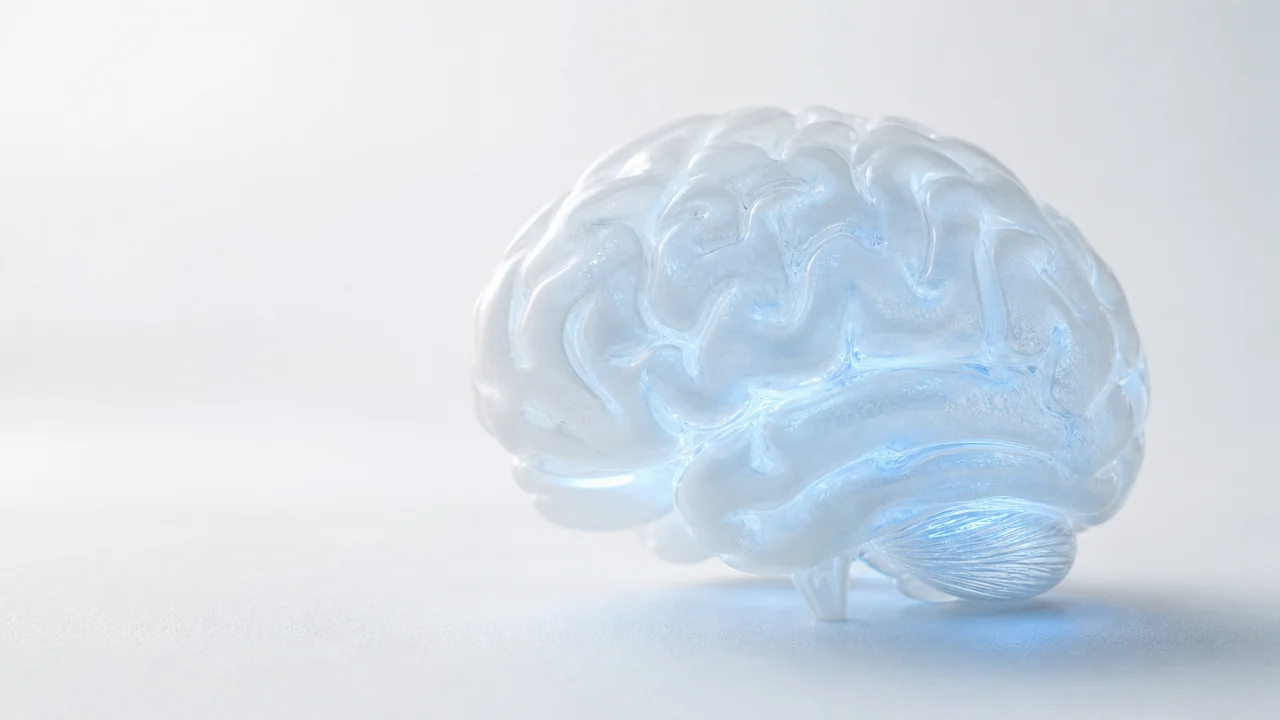
Annotated brain tumour scans are scarce, legally encumbered and slow to share. BrainSync removes the bottleneck by generating the imaging itself: full 3D MRI volumes across four sequences, with tumour placement you control. No real patient study is redistributed.
Capabilities
Architecture
Method
Generating a full 3D volume directly is intractable at clinical resolution. BrainSync works in a compressed latent space instead, which is what makes whole-volume synthesis practical.
A KL-VAE, trained against a PatchGAN discriminator, maps each 128³ multi-sequence volume into a compact latent representation.
A Diffusion Transformer trained with Flow Matching produces new latents from noise, conditioned on a tumour segmentation mask and steered with classifier-free guidance.
Latents are decoded into full volumes across all four sequences and exported as one NIfTI file per modality.


Contact
Enquiries from research groups and clinical AI teams are welcome. Pilot access is granted case by case.
Research preview. Model training is in progress. Early partners help shape how BrainSync is validated.
Dennis Münichsdorfner
Founder · Technology
Designed and built the BrainSync pipeline, from the latent autoencoder to the diffusion transformer, its evaluation and the memorisation audit. Your contact for all technical questions.
Tobias Berger
Co-founder · Partnerships
First point of contact for research groups and clinical teams interested in pilot access and collaboration.
Opens in your mail app — nothing is stored on this page.
Explained
Brain tumours are read across four MRI sequences. Each shows different tissue properties. Only together do they separate active tumour, necrotic core and surrounding oedema.
Native T1
The clearest view of anatomy: grey and white matter, the structure of the brain.
T1 with contrast
A contrast agent collects where the blood–brain barrier is disrupted, so active tumour lights up.
T2-weighted
Fluid appears bright, which shows the oedema surrounding the tumour.
T2-FLAIR
T2 with normal brain fluid suppressed, revealing oedema and infiltration next to the ventricles.
What this means for BrainSync
Explained
A segmentation mask is a 3D map that marks, voxel by voxel, which tissue belongs to the tumour. It is the same kind of annotation radiologists and segmentation models already work with.
Define
Reuse a mask from an existing annotation, or set the location and extent of the lesion yourself.
Condition
The mask is passed to the generator as an input, alongside the noise it starts from.
Generate
All four sequences are produced with the lesion where the mask defines it, on otherwise plausible anatomy.
What this means for BrainSync
Explained
Generative models can memorise individual training images and reproduce them almost unchanged. For brain MRI that is a privacy risk: fine anatomical detail, such as the folding of the cortex, can identify a person.
The problem
Studies have shown that diffusion models trained on medical images can reproduce a substantial share of their training cases.
The audit
BrainSync automatically tests whether generated volumes reproduce patients from the training set.
The evidence
Privacy is measured on the output itself, rather than assumed because the data is synthetic.
What this means for BrainSync
Explained
NIfTI is the standard file format in neuroimaging research. Each file holds a full 3D volume together with its voxel spacing and its orientation in space.
One per sequence
T1n, T1c, T2w and T2-FLAIR are delivered as separate files, just as in public research datasets.
Opens everywhere
Read directly by common research software such as 3D Slicer, ITK-SNAP, FSL, nibabel and MONAI.
No conversion
No export from clinical formats and no reformatting step before the data reaches your training code.
What this means for BrainSync
Rechtliches
BrainSync
Dennis Münichsdorfner und Tobias Berger
Badtorweg 10/2
74523 Schwäbisch Hall
Deutschland
Dennis Münichsdorfner (Gründer)
Tobias Berger (Mitgründer)
E-Mail: tobias@brainsync-ki.com
Telefon: +49 176 60929010
Dennis Münichsdorfner
Anschrift wie oben
Wir sind nicht bereit und nicht verpflichtet, an Streitbeilegungsverfahren vor einer Verbraucherschlichtungsstelle teilzunehmen.
BrainSync ist eine Forschungsvorschau. Die erzeugten Daten sind ausschließlich für Forschungszwecke bestimmt. BrainSync ist kein Medizinprodukt und nicht für diagnostische oder therapeutische Zwecke vorgesehen.
Diese Website enthält Links zu externen Websites Dritter, auf deren Inhalte wir keinen Einfluss haben. Für diese Inhalte ist stets der jeweilige Anbieter verantwortlich. Bei Bekanntwerden von Rechtsverletzungen entfernen wir derartige Links umgehend.
Legal
This is a courtesy translation. The German version (Impressum) is legally binding.
BrainSync
Dennis Münichsdorfner and Tobias Berger
Badtorweg 10/2
74523 Schwäbisch Hall
Germany
Dennis Münichsdorfner (Founder)
Tobias Berger (Co-founder)
Email: tobias@brainsync-ki.com
Phone: +49 176 60929010
Dennis Münichsdorfner
Address as above
We are neither willing nor obliged to take part in dispute resolution proceedings before a consumer arbitration board.
BrainSync is a research preview. Generated data is intended exclusively for research purposes. BrainSync is not a medical device and is not intended for diagnostic or therapeutic use.
This website contains links to external third-party websites whose content we cannot influence. The respective provider is always responsible for that content. If we become aware of any legal violations, we will remove such links immediately.
Rechtliches
Diese Website ist bewusst sparsam gebaut. Sie setzt keine Cookies, verwendet keine Analyse- oder Tracking-Dienste und bindet keine Inhalte von Drittanbietern ein. Schriften, Videos, Bilder und Kartendaten werden von unserem eigenen Server ausgeliefert.
BrainSync
Dennis Münichsdorfner und Tobias Berger
Badtorweg 10/2
74523 Schwäbisch Hall
Deutschland
E-Mail: tobias@brainsync-ki.com
Telefon: +49 176 60929010
Diese Website wird bei ALL-INKL.COM – Neue Medien Münnich, Inhaber René Münnich, Hauptstraße 68, 02742 Friedersdorf, Deutschland, betrieben. Beim Aufruf der Seite verarbeitet der Server automatisch Daten, die Ihr Browser übermittelt: IP-Adresse, Datum und Uhrzeit des Zugriffs, aufgerufene Seite, zuvor besuchte Seite (Referrer) sowie Browser und Betriebssystem.
Diese Daten sind technisch erforderlich, um die Website auszuliefern und ihre Sicherheit und Stabilität zu gewährleisten. Rechtsgrundlage ist Art. 6 Abs. 1 lit. f DSGVO. Die Logfiles werden nach 7 Tagen gelöscht. Mit dem Hosting-Anbieter besteht ein Vertrag zur Auftragsverarbeitung nach Art. 28 DSGVO.
Das Kontaktformular auf dieser Seite speichert und übermittelt keine Daten. Es öffnet lediglich Ihr eigenes E-Mail-Programm mit einer vorausgefüllten Nachricht, die Sie selbst absenden.
Wenn Sie uns per E-Mail schreiben, verarbeiten wir Ihre E-Mail-Adresse und die Angaben aus Ihrer Nachricht, um Ihre Anfrage zu beantworten. Rechtsgrundlage ist Art. 6 Abs. 1 lit. b DSGVO, soweit Ihre Anfrage auf eine Zusammenarbeit zielt, im Übrigen Art. 6 Abs. 1 lit. f DSGVO. Wir löschen die Daten, sobald die Anfrage abschließend bearbeitet ist und keine gesetzlichen Aufbewahrungspflichten entgegenstehen. Unser E-Mail-Postfach wird über Google Workspace bereitgestellt, Anbieter ist die Google Ireland Limited, Gordon House, Barrow Street, Dublin 4, Irland. Mit Google besteht ein Vertrag zur Auftragsverarbeitung nach Art. 28 DSGVO. Eine Übermittlung von Daten in die USA ist dabei nicht ausgeschlossen; sie erfolgt auf Grundlage des EU-U.S. Data Privacy Framework, unter dem Google zertifiziert ist, sowie der EU-Standardvertragsklauseln.
Wir setzen derzeit keine Analyse- oder Tracking-Dienste ein. Sollten wir künftig solche Dienste nutzen, geschieht dies ausschließlich nach Ihrer vorherigen Einwilligung (Art. 6 Abs. 1 lit. a DSGVO, § 25 Abs. 1 TDDDG). Diese Erklärung wird dann entsprechend ergänzt.
Alle Schriftarten, Videos und Bilder sind Bestandteil dieser Website und werden von unserem Server geladen. Es wird keine Verbindung zu Google oder anderen Drittanbietern aufgebaut.
Die Karte im Kontaktbereich ist eine aus OpenStreetMap-Daten erzeugte Grafik (© OpenStreetMap-Mitwirkende, Lizenz ODbL). Sie ist fest in die Seite eingebettet; beim Aufruf werden keine Daten an OpenStreetMap übermittelt.
Sie haben das Recht auf Auskunft (Art. 15 DSGVO), Berichtigung (Art. 16), Löschung (Art. 17), Einschränkung der Verarbeitung (Art. 18), Datenübertragbarkeit (Art. 20) und Widerspruch gegen die Verarbeitung (Art. 21). Eine erteilte Einwilligung können Sie jederzeit mit Wirkung für die Zukunft widerrufen (Art. 7 Abs. 3 DSGVO). Wenden Sie sich dazu formlos an die oben genannte E-Mail-Adresse.
Widerspruchsrecht: Soweit wir Daten auf Grundlage von Art. 6 Abs. 1 lit. f DSGVO verarbeiten, können Sie aus Gründen, die sich aus Ihrer besonderen Situation ergeben, jederzeit Widerspruch gegen die Verarbeitung einlegen (Art. 21 DSGVO). Wir verarbeiten die Daten dann nicht mehr, es sei denn, wir können zwingende schutzwürdige Gründe nachweisen, die Ihre Interessen überwiegen, oder die Verarbeitung dient der Geltendmachung, Ausübung oder Verteidigung von Rechtsansprüchen.
Eine automatisierte Entscheidungsfindung einschließlich Profiling (Art. 22 DSGVO) findet nicht statt.
Sie haben das Recht, sich bei einer Datenschutz-Aufsichtsbehörde zu beschweren. Für uns zuständig ist:
Der Landesbeauftragte für den Datenschutz und die Informationsfreiheit Baden-Württemberg
Heilbronner Straße 35, 70191 Stuttgart
www.baden-wuerttemberg.datenschutz.de
Diese Website nutzt aus Sicherheitsgründen eine SSL- bzw. TLS-Verschlüsselung. Eine verschlüsselte Verbindung erkennen Sie an „https://“ in der Adresszeile Ihres Browsers.
Stand: September 2026
Legal
This is a courtesy translation. The German version (Datenschutzerklärung) is legally binding.
This website is deliberately lean. It sets no cookies, uses no analytics or tracking services and embeds no third-party content. Fonts, videos, images and map data are delivered from our own server.
BrainSync
Dennis Münichsdorfner and Tobias Berger
Badtorweg 10/2
74523 Schwäbisch Hall
Germany
Email: tobias@brainsync-ki.com
Phone: +49 176 60929010
This website is hosted by ALL-INKL.COM – Neue Medien Münnich, owner René Münnich, Hauptstraße 68, 02742 Friedersdorf, Germany. When you open the site, the server automatically processes data transmitted by your browser: IP address, date and time of access, page requested, previously visited page (referrer), and browser and operating system.
This data is technically necessary to deliver the website and to ensure its security and stability. The legal basis is Art. 6(1)(f) GDPR. Log files are deleted after 7 days. A data processing agreement pursuant to Art. 28 GDPR is in place with the hosting provider.
The contact form on this site neither stores nor transmits any data. It simply opens your own email program with a pre-filled message that you send yourself.
If you email us, we process your email address and the information in your message in order to answer your enquiry. The legal basis is Art. 6(1)(b) GDPR where your enquiry concerns a collaboration, and otherwise Art. 6(1)(f) GDPR. We delete the data once your enquiry has been fully dealt with, unless statutory retention obligations apply. Our mailbox is provided via Google Workspace by Google Ireland Limited, Gordon House, Barrow Street, Dublin 4, Ireland. A data processing agreement pursuant to Art. 28 GDPR is in place with Google. A transfer of data to the USA cannot be ruled out; it takes place on the basis of the EU-U.S. Data Privacy Framework, under which Google is certified, and the EU Standard Contractual Clauses.
We currently use no analytics or tracking services. Should we use such services in future, this will only happen with your prior consent (Art. 6(1)(a) GDPR, § 25(1) TDDDG), and this policy will be updated accordingly.
All fonts, videos and images are part of this website and are loaded from our server. No connection is made to Google or any other third party.
The map in the contact section is a graphic generated from OpenStreetMap data (© OpenStreetMap contributors, ODbL licence). It is embedded in the page; no data is sent to OpenStreetMap when you view it.
You have the right of access (Art. 15 GDPR), rectification (Art. 16), erasure (Art. 17), restriction of processing (Art. 18), data portability (Art. 20) and to object to processing (Art. 21). You may withdraw any consent given at any time with effect for the future (Art. 7(3) GDPR). To do so, simply contact us at the email address above.
Right to object: Where we process data on the basis of Art. 6(1)(f) GDPR, you may object to the processing at any time on grounds relating to your particular situation (Art. 21 GDPR). We will then no longer process the data unless we can demonstrate compelling legitimate grounds that override your interests, or the processing serves the establishment, exercise or defence of legal claims.
No automated decision-making, including profiling (Art. 22 GDPR), takes place.
You have the right to lodge a complaint with a data protection supervisory authority. The authority responsible for us is:
Der Landesbeauftragte für den Datenschutz und die Informationsfreiheit Baden-Württemberg
Heilbronner Straße 35, 70191 Stuttgart, Germany
www.baden-wuerttemberg.datenschutz.de
For security reasons, this website uses SSL/TLS encryption. You can recognise an encrypted connection by “https://” in your browser's address bar.
Last updated: September 2026
 BrainSync